Zu MacDermot
+447554444780
zumacdermot8@gmail.com
Durable footballs for Zambia - A pitch for a non-profit:
One football can change 20 lives.
One football can lift 20 children out of poverty.
But not all children can access a football, especially in rural Africa.
This football provides the solution.
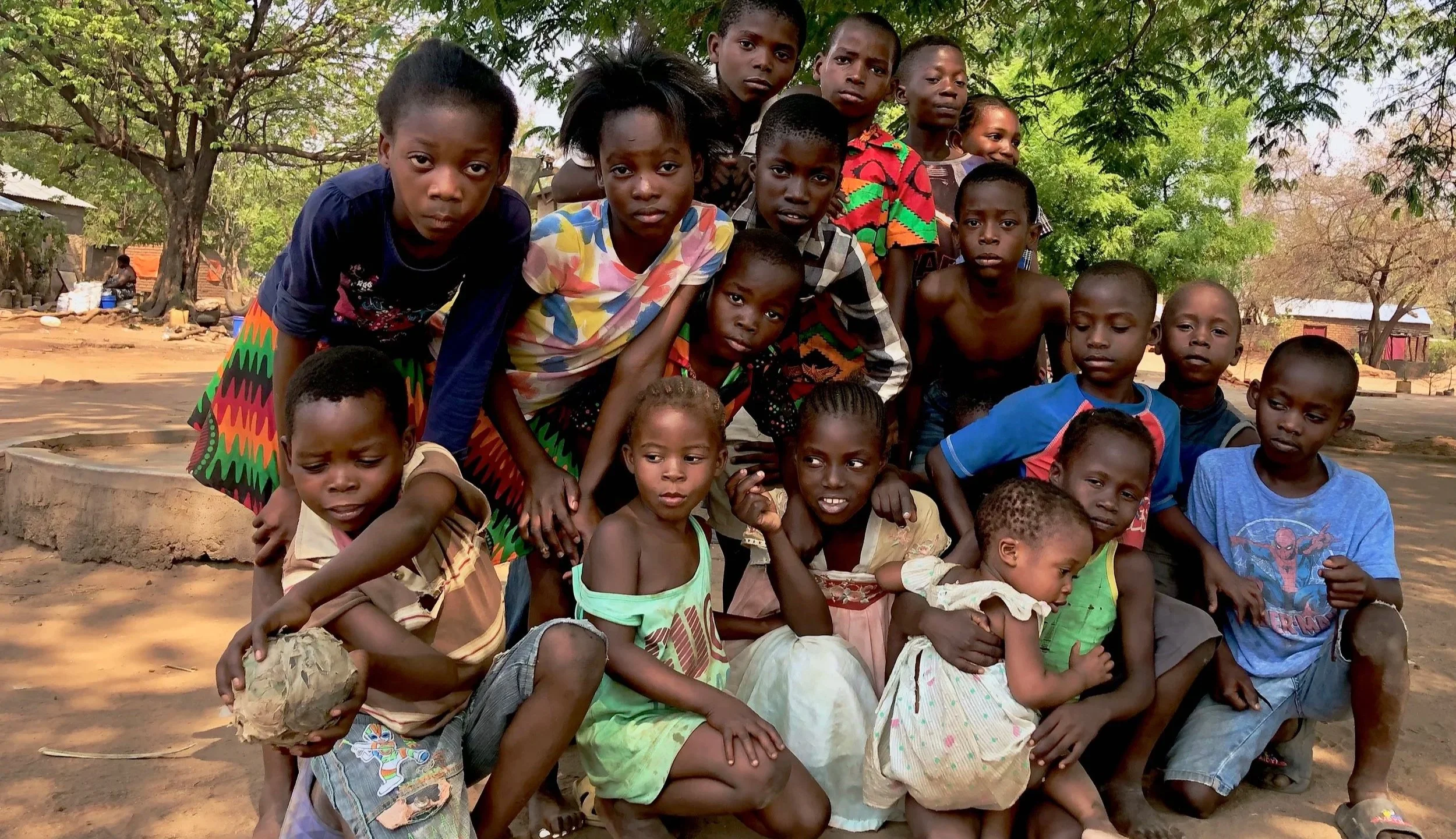
📍Mfuwe, Eastern Zambia: These children are desperate to play football. They were playing on a mud patch and using bricks as goals, using a creative substitute: plastic bags wrapped with strips of cloth. Their ‘ball’ didn’t bounce or roll properly, and after a few minutes of playing, the ball unravelled, and the game was over.
Zambia is a football-mad country: there is no shortage of desire to play amongst boys and girls. However, regular footballs in Zambia:
1. Do not last
2. Are expensive
3. Are hard to find
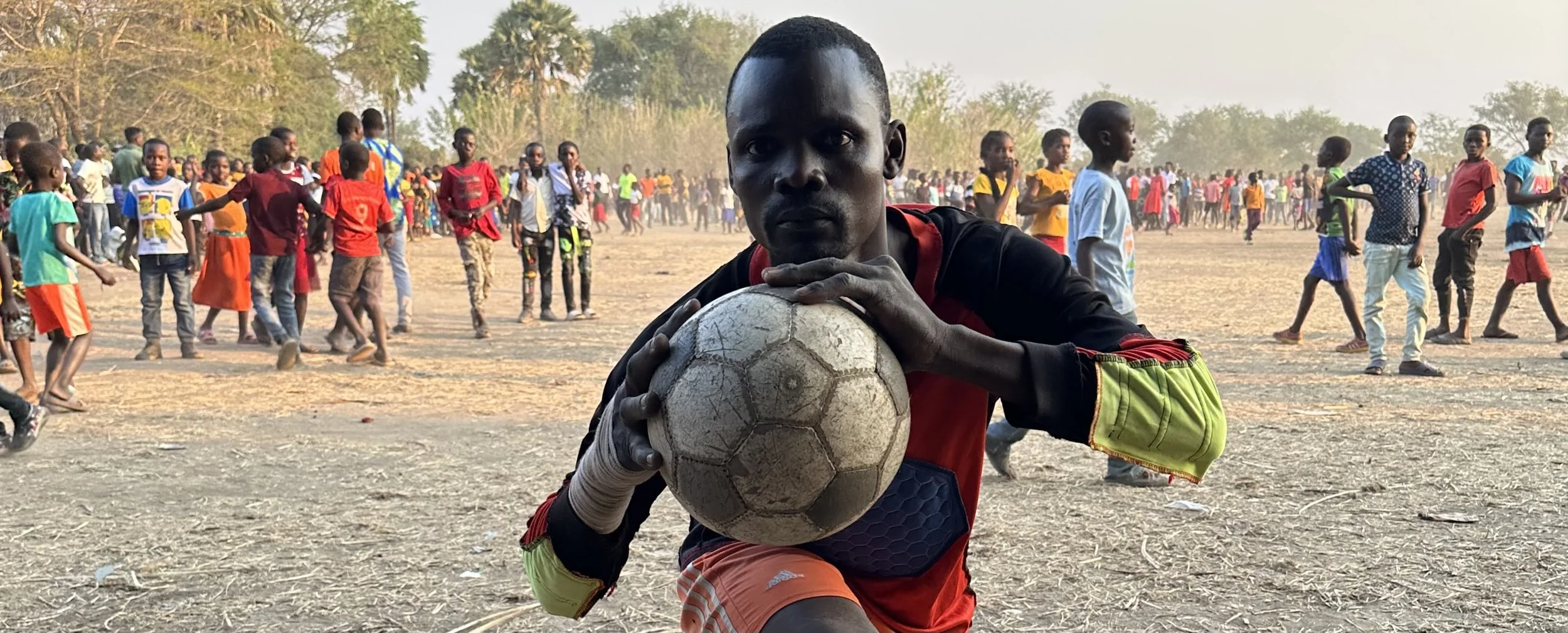
That means for casual or grassroots level, footballs are often not available.
As a result, only 7.5% of Zambian schoolboys get sufficient physical activity. For girls, it is even less.
The Solution:
Very simple - a football that meets two criteria:
1. Ultra-durable
2. Cost-efficient
Such a product almost exists:
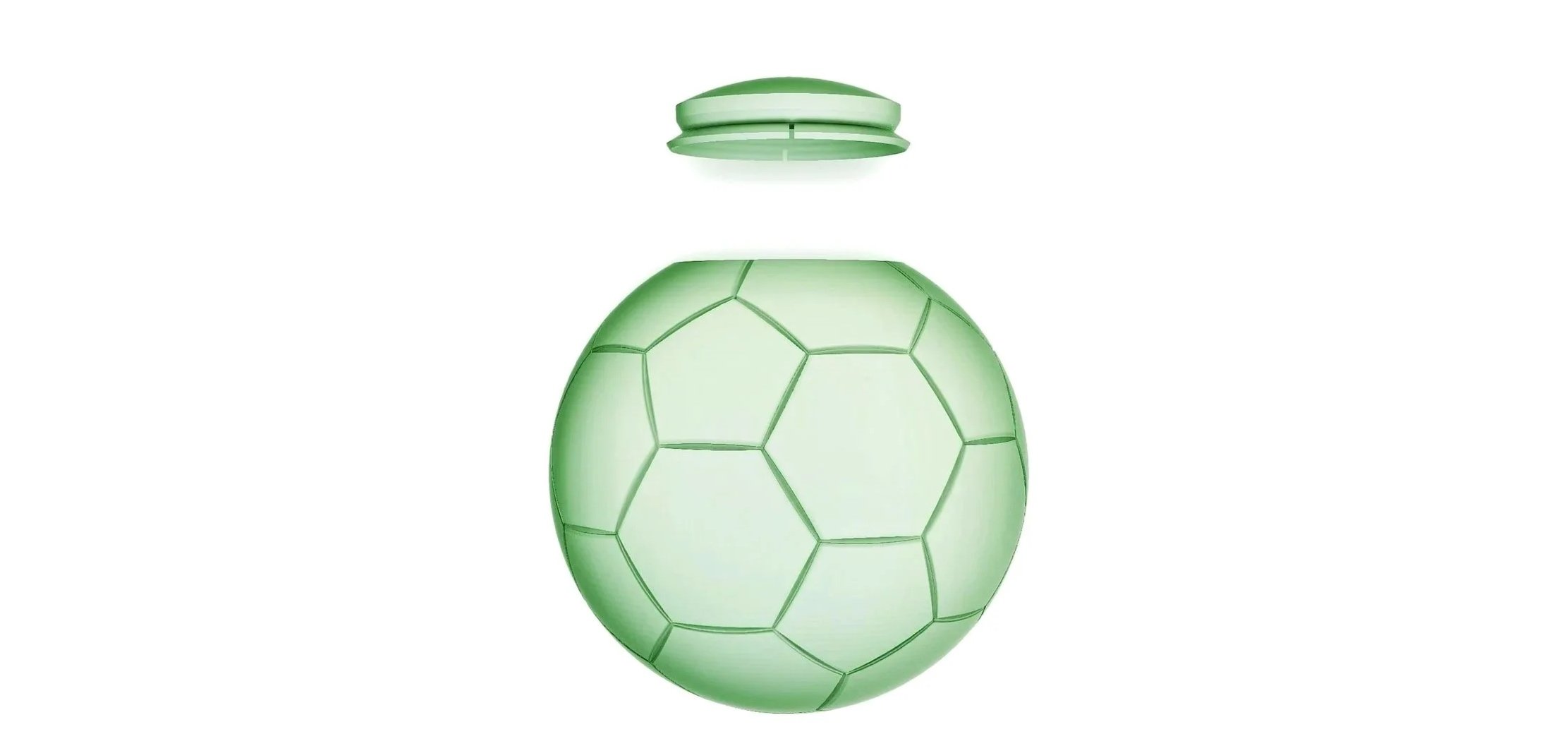
A foamed EVA (ethylene-vinyl acetate) moulded ball - it can last 10x longer than a normal football.
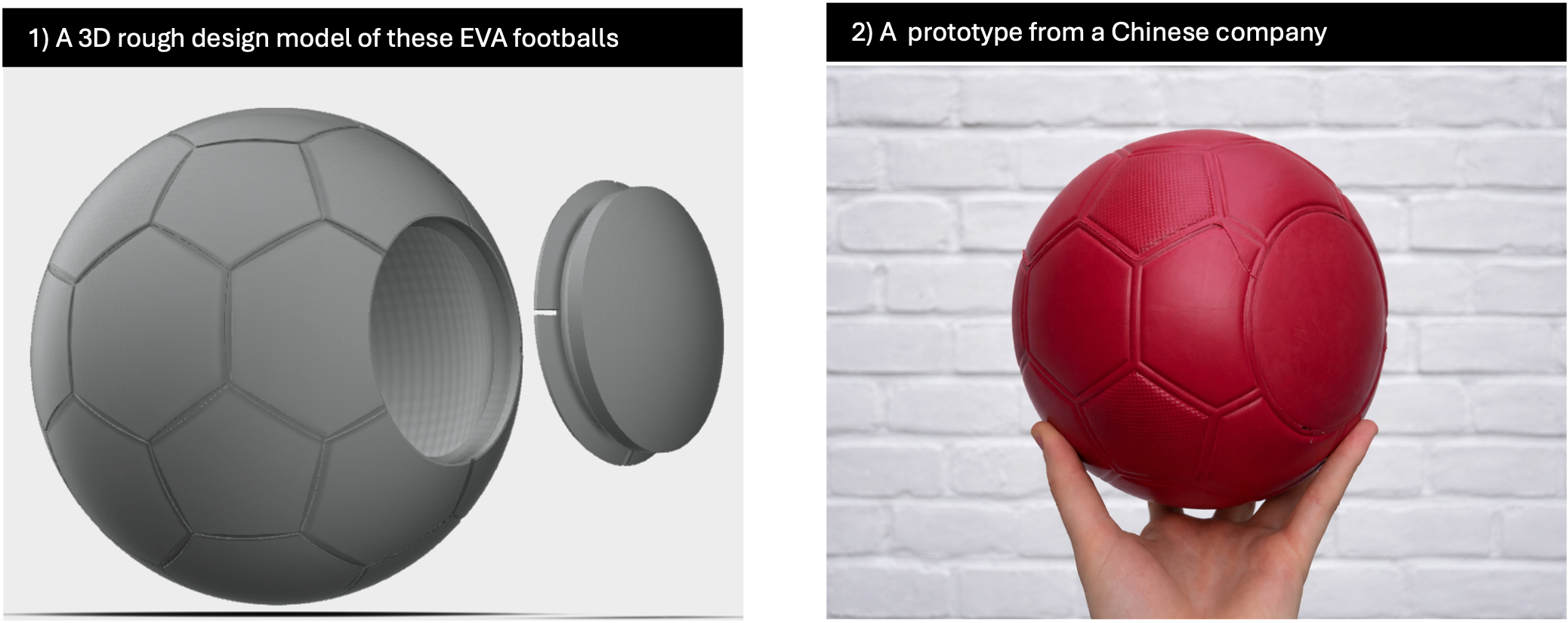
However, these footballs are still in a development stage.
But, with a few material and design tweaks, they offer the perfect solution.
Once designed, the ball will cost around £4-5 to produce.
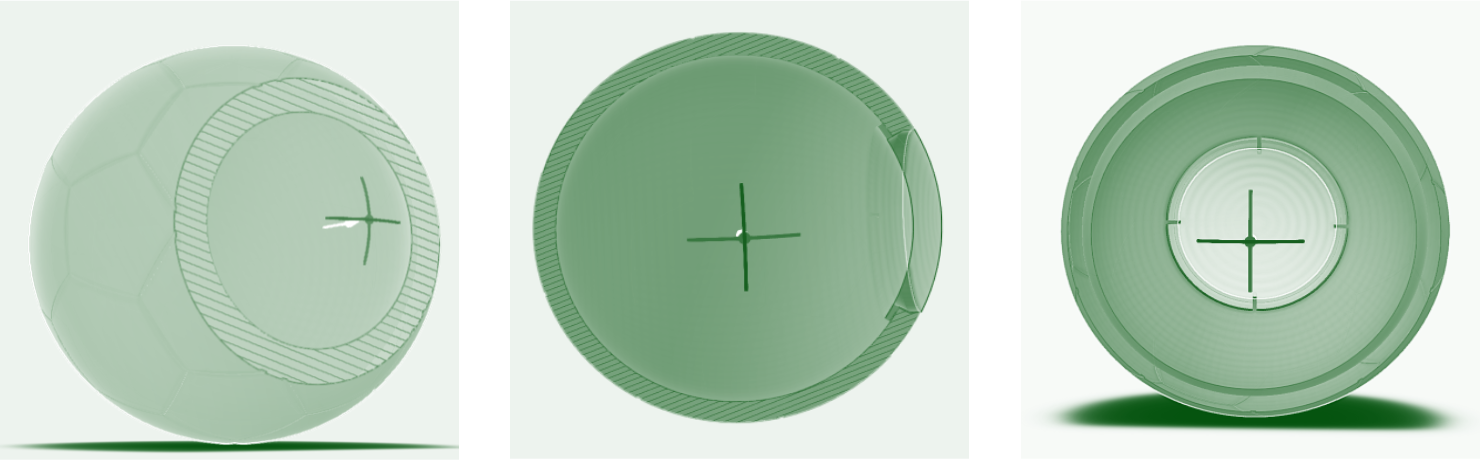
The next steps require modelling, chemical characterisation, and performance testing to create a new product.
-
1 - Material Characterisation
I have four EVA foam samples - each with distinct properties - that were constructed specifically for footballs. However, to find the optimal chemical makeup (EVA to inorganic filler ratio, vinyl-acetate to ethylene ratio, inorganic filler type, blowing agent quantity, cell uniformity, etc..) that ensures durability, ball performance and affordability, testing is required.
The quote for this work is £2530.
2 - Design Phase
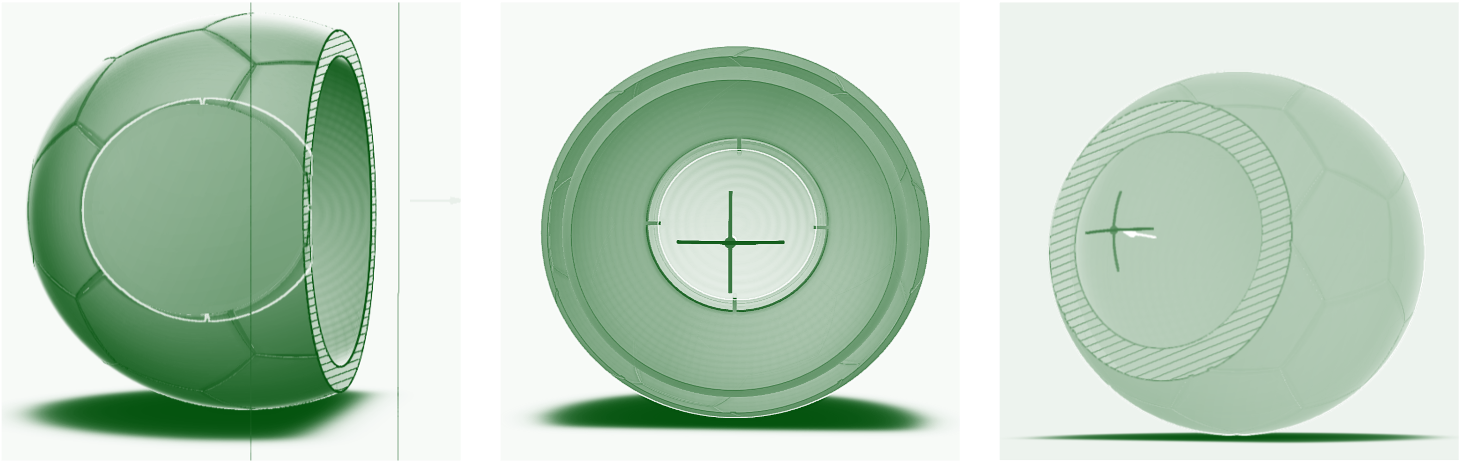
To build a new product, the ball will have to be physically redesigned to make it more durable. I have the design idea in place; it just needs to be drawn to the standard of a manufacturer's specification.
I estimate this cost to be circa ~£1,000-£2,000.
3 - Initial Production
To redesign this product, new molds for the EVA injection process have to be built. Once built, it is owned by the buyer, but cannot be transported out of their factory.
My initial quote - from a Chinese company - was £6,000 per mold creation x2: Both the ‘plug’ and the ball (see design) need to be remoulded, so assuming ~£10,000.
If this redesign process is successful, we will have produced a product ready for use for £ 15,000.
But to do that, funding of £14,000 - £15,000 is required.
I am looking for a funder who believes in this project and can support it.
-
Beyond the design stage, the next step would be to secure additional funding to kick-start this project.
The initial estimates include: the ball cost (assumes order of 5,000 balls), packaging cost, shipping/transport, import duty, storage, and distribution.
Low estimate: ~£40,000 (~£8 per ball delivered to a team/community in Zambia)
High estimate: ~£54,000 (~£10.70 per ball delivered to a team/community in Zambia)
As these assumptions exclude personnel cost and leaves no headroom, we estimate that £80,000 - £100,000 is required post-ball redesign.
*The cost breakdown is much more specific than this, so please get in touch if you would like to understand the calculation details.
-
Where and who:
Distribution would start in and around the Mambwe District of Zambia’s Eastern Province, due to personal relationships and experience in this area. Local schools and football clubs would be given donations of footballs for immediate impact and maximum reach.
Distribution methods:
Through partnership with local NGOs in both the education and conservation sectors - they frequently visit local schools and other remote communities where footballs are needed the most. It would be in their interest to donate our footballs to help build relationships with local communities. Similarly, community outreach NGOs often work in very remote villages and communities, and would be worth approaching.
Sell the footballs directly. Again, a local NGO could support sales through their shop. It is also worth approaching other local businesses to get the balls to the community as fast as possible. This is important to make the local communities understand the value of the product.
Expansion:
This problem is not limited to Zambia. Young people across Sub-Saharan Africa face the same challenges. While starting in eastern Zambia would be logical given experience and connections, I hope this project could be taken far beyond and impact lives on a much larger scale.
-
This project needs to be financially sustainable and bring in enough money to expand quickly. There are three proposed methods of income:
1 - Individual Giving
A “donate £25 and give a u13 team a football for a year” approach for fundraising in the UK.
The tourism market – local safari camps have shops that allow local NGO’s to promote their causes. Opportunity to gain exposure to wealthy individuals, as well as provide ‘donate a football’ options for tourists.
2 - Corporate Advertising/Marketing
The balls can have logos and messaging imprinted on the surface. Aim: for a corporation to buy and donate 10,000 balls for promotional purposes.
3 - Direct Sales
It is important to have income other than philanthropic funding. Based on experience, I believe there is a market available for this product.
-
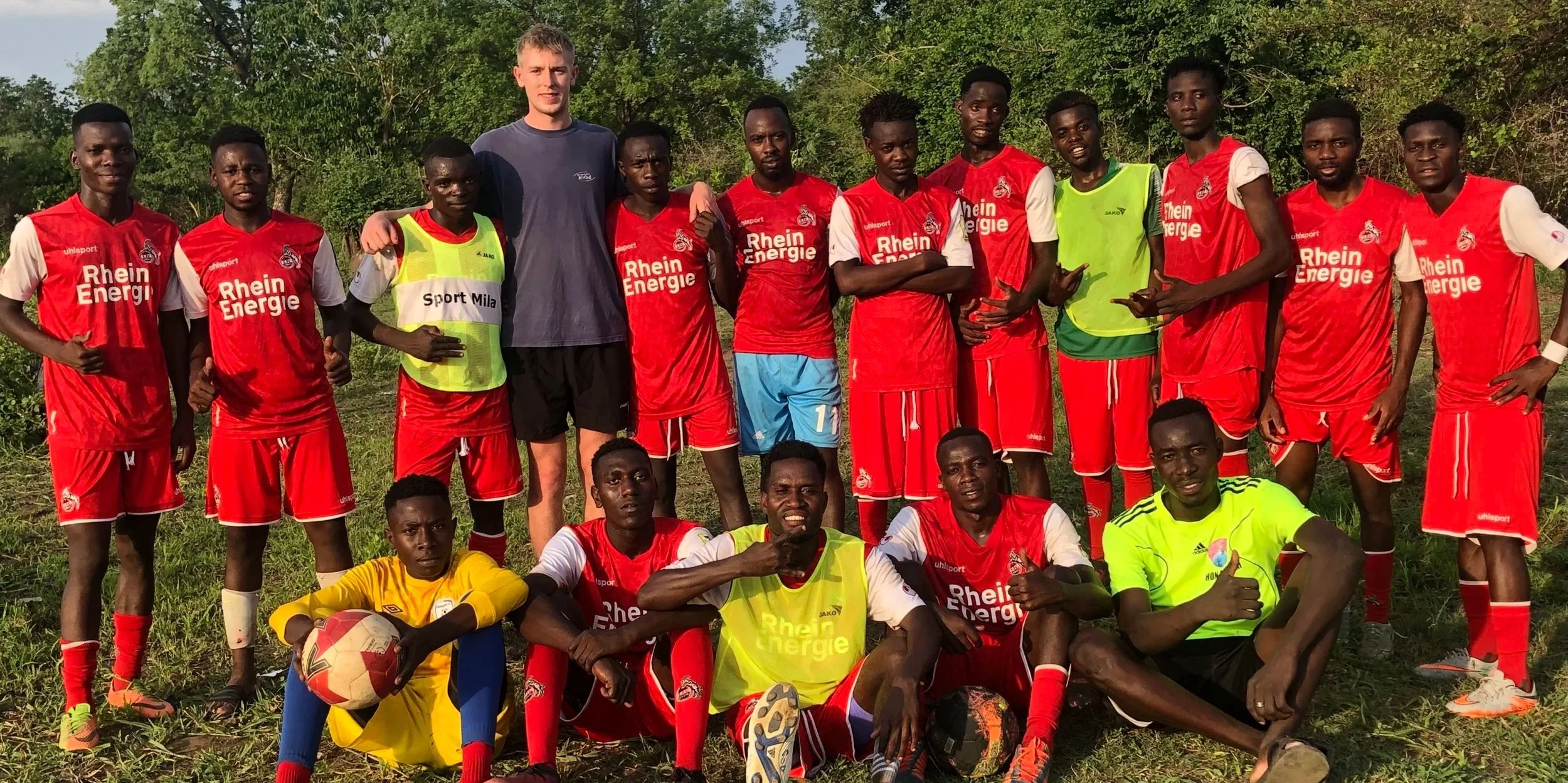
In 2023 I spent nearly six months in Mfuwe, a rural town in Zambia, working as an assistant coach for Malambo United Football Club. I brought footballs, cones and bibs from the UK and got straight to work. I loved it. But within weeks, I was down to only two balls. The rest had been punctured by thorny acacia trees behind the goalposts, quickly ending any shooting drills. The two footballs that remained soon became so battered by the rough ground that the stitching started to give way.
So I went looking for replacements. Should be easy, right? Surely in a football-mad country, where every child’s dream is to play football all day, there’d be a football is every market, shop or even gas station? Absolutely not. I looked and looked but found nothing. I noticed young children only ever played with plastic bags wrapped in string. I learned the local under-13 team hadn't been training for two months because they didn’t have a ball. The whole community was desperate to play, but they couldn’t.
The frustration built. Growing up, football was always available to me: it was my escape, the time I could relax, forget everything, and build friendships. It taught me so much about teamwork, and I learned far more socially from football than all my years in a classroom. Seeing kids without that basic opportunity made me realise how fundamental a single ball can be — and I began looking for solutions.
I started chatting to local members of the community. I asked them where they get footballs from. How long do they typically last? How much do they cost? What balls are the best? I got some interesting answers. Balls could only be bought in Chipata (a "local" town over 3 hours drive away). But they were expensive – the equivalent of £30. Very expensive for a football that could not be guaranteed to last more than a week, and for a community where most are living well under the poverty line. On top of that, everyone I spoke to told me that footballs don’t last – they might survive a week, a chance at a month, but beyond that you are very lucky.
After losing another ball the following week to thorns I ordered balls from the UK. I chose to trial two rubber balls that claimed to be long-lasting and good for rough surfaces. Within 3 days, one had burst - a thorn straight through the seam.
I arrived back in the UK none the wiser, so I got to work. What about a rubber solution – could the football panels be made thicker, stronger, longer lasting? But for rubber to work, there will always have to be a seam, and seams eventually wear through if not pierced by a thorn first. My breakthrough came from finding an EVA foam moulded ball: unpoppable because it didn’t require an air-tight bladder, and a foam that takes months if not years to wear through. Why have these balls not made it to Zambia?
Well, despite them being crazily expensive (£60+), I took one to Zambia a few months later. Only then did a local coach spot it, approach me, and tell me he had seen them before. He explained that the community had been given some a few years ago and they had lasted over a year, with daily use and huge enjoyment before eventually wearing through. So, there is a solution.
However, £60 is too expensive for Zambia, so I began searching for a more affordable way to make them. After researching the materials and the production process, I reached out to factories around the world that specialise in these foam-moulded products. Eventually, a company in China came back and claimed they had made a similar ball before. After months of emails that consisted of language barriers, confusion, drawings, and sales pitches, I got them to send me a prototype of their product.
It was much better than expected. For a production cost of only £4, I knew perfection was not likely. After conducting some basic tests, I found that while the football performed reasonably well, it had a slightly uneven weight distribution, non-optimal chemical makeup, and several small design issues, which meant that it was not quite good enough. But it was a step in the right direction – and I learnt these foam products can be affordable with the right design.
So, put simply: EVA footballs are the solution. With a better design and material, this problem can be solved. However, to progress this endeavour, I will need support. Hence this pitch. I am looking for a funder/s who understand the problem and are interested in being part of the solution.